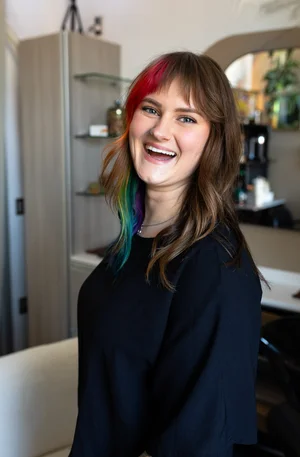
What Dimensional Color Looks Like on Women Over 40
There's a version of hair color that works beautifully in your twenties and starts to feel slightly off as you get older. Bright, uniform, high-contrast results that looked bold and intentional at 28 can start to feel harsh or aging at 45. The hair isn't the problem. The approach is.
Dimensional color is one of those things that genuinely gets better with age, or more specifically, it's one of the approaches that works best for women in their 40s, 50s, and beyond. At Hairy Odd Mother Studio in Puyallup, WA, it's the foundation of almost everything I do, and understanding why it works so well for this stage of life makes a big difference in how clients think about their color going forward.
What Changes About Color Needs as You Get Older
A few things shift as women move through their 40s and beyond that affect how color looks and wears.
Skin tone often softens and becomes cooler or more neutral with age. High-contrast color that fights against a softer complexion can look jarring rather than striking. The same blonde that looked edgy and intentional at 30 can look harsh against skin that's changed over time. This isn't a reason to go darker or give up on color entirely. It's a reason to think differently about tone and contrast.
Gray hair enters the picture in ways that change the texture and behavior of the hair overall. Gray strands are often coarser and more resistant than pigmented hair, which means they absorb color differently and can affect the overall finish of a color result if the approach doesn't account for them.
And the lifestyle reality is that most women in this stage of life are genuinely busy. Careers, families, responsibilities. A color approach that demands a strict six-week schedule or significant daily styling effort starts to feel like a burden rather than something that supports how you want to feel about yourself.
Dimensional color addresses all three of those realities in ways that flat or high-maintenance color approaches don't.
What Dimensional Color Actually Does at This Stage
Dimensional color uses multiple tones placed strategically to create depth, movement, and variation throughout the hair. Rather than applying one uniform color from root to end, the result has lighter and darker pieces woven through it that catch light differently and create a sense of life and richness in the hair.
For women over 40, that variation does something specific and important. It softens the overall impression of the color in a way that works with changing skin tones rather than against them. Instead of a hard line of color sitting on top of the hair, dimensional color has a quality that reads as natural and considered. It looks like very good hair, not obviously colored hair.
It also gives the gray something to do. Rather than covering gray completely with a flat application that creates a stark grow-out line, dimensional color can blend the gray into the overall result so it becomes part of the look rather than something being managed around. Depending on how much gray is present and what the goal is, this can mean using the gray as part of a lighter section, softening it with toning, or incorporating it into a blended transition that grows out without a visible line of demarcation.
At Hairy Odd Mother Studio, the dimensional color approach I use is built specifically around creating results that feel refined and wearable, not results that announce themselves. That distinction matters more as women get older, and it's something I think about with every color I plan.
Why the Grow-Out Matters More Now
In your twenties, coming in every five or six weeks for a color touch-up might have been manageable or even enjoyable. At 45 with a full schedule, the same maintenance expectation can start to feel like an obligation you resent.
One of the most practical advantages of dimensional color for women in this stage of life is that it grows out gracefully. Because the technique uses blended placements rather than a solid root application, there's no single hard line where the new growth meets the colored hair. The transition is soft and gradual, which means the hair continues to look intentional over a much longer stretch of time.
Most of my clients at Hairy Odd Mother Studio are comfortable going ten to fourteen weeks between color appointments with a well-designed dimensional result. Some go even longer. That flexibility is built into the technique, and for busy women who want great hair without it dominating their calendar, it's one of the most meaningful things dimensional color offers.
The Tone Conversation That Changes Everything
For women over 40, getting the tone right is the difference between color that looks like it belongs on your face and color that doesn't quite land.
Cooler, ashier tones that can look striking and polished on younger clients sometimes read as flat or washed out against softer mature complexions. Warmer tones that add richness and glow are often a better fit, though the specific balance depends entirely on your individual coloring. Neutral, golden, and soft warm tones tend to be particularly flattering at this stage because they complement rather than contrast with the natural changes in skin tone that happen over time.
This is where the consultation at Hairy Odd Mother Studio is so important. I look at your actual coloring, your current hair, your gray distribution, and your lifestyle before making any tonal recommendations. The goal is always color that makes you look like the best version of yourself, not a version of someone else's hair.
What It Doesn't Have to Be
There's a version of "dimensional color for mature women" that shows up in certain salon conversations that feels patronizing. A very subtle, very safe, very beige result that seems designed to disappear rather than enhance.
That's not what I'm describing. Dimensional color at this stage of life can be rich, striking, and beautifully noticed. It can have depth and warmth and movement that makes people comment on how great your hair looks. The difference from high-maintenance or high-contrast approaches isn't that it's less beautiful. It's that it works with where you are rather than fighting it.
Clients who come into Hairy Odd Mother Studio and leave with dimensional color consistently tell me it's the most natural their hair has looked in years, and the most confident they've felt about it. That's the result I'm always working toward.
FAQ
Is dimensional color appropriate if I have a lot of gray? Yes. Gray can be incorporated into a dimensional approach beautifully, either by blending it into lighter sections or softening the contrast between gray and pigmented hair. The right approach depends on how much gray you have and what result you're looking for. We figure that out at the consultation.
Will dimensional color work on darker hair? Absolutely. Dimensional color on darker hair typically involves adding warmth, depth, and subtle variation rather than dramatic lightening. The result is richness and movement that makes dark hair look noticeably healthier and more vibrant.
How is this different from balayage? Balayage is one technique used to create dimensional color. Dimensional color is the overall outcome and can involve several techniques including balayage, toning, glossing, and lowlights depending on your hair and goals.
How often will I need to come in? Most clients doing dimensional color come in every ten to fourteen weeks. The grow-out is designed to be soft and gradual rather than abrupt, which is what allows for that extended schedule.
I've had color that felt too harsh before. How is this different? Harshness in color usually comes from high contrast, flat application, or tones that don't complement the complexion. Dimensional color specifically avoids all of those things. The goal is always a result that looks like your hair, just better.
Dimensional color is one of those services that genuinely comes into its own for women over 40, and at Hairy Odd Mother Studio in Puyallup, WA, it's the foundation of almost everything I do. If you've been feeling like your color isn't quite working the way it used to or you're ready for something that feels more refined and less effortful, I'd love to have that conversation.